


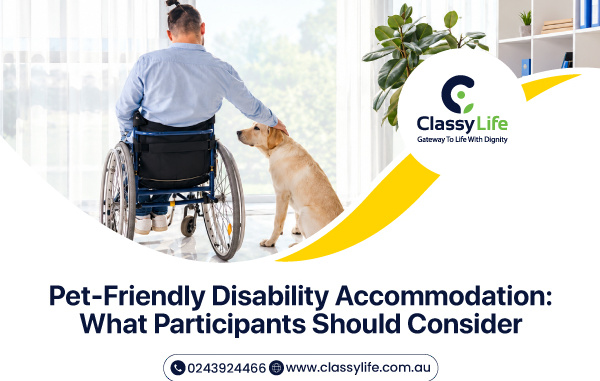
Explore pet-friendly disability accommodation with Classy Life. Learn about pet policies, shared living, responsibilities and NDIS considerations.
Assistance and support for individuals to live independently in shared or individual homes, focusing on daily living skills, safety, and community participation.
Explore pet-friendly disability accommodation with Classy Life. Learn about pet policies, shared living, responsibilities and NDIS considerations.
Personal goals can look very different from one person to another, especially for people with disabilities. For some people, the goal might be learning to prepare their meals independently.
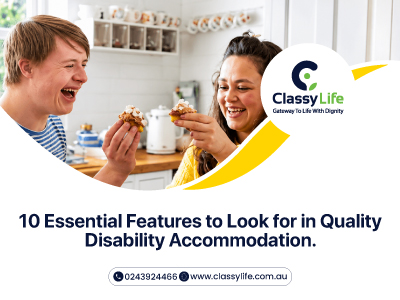
The right home can significantly influence a person’s safety, independence and overall quality of life. Finding quality disability accommodation involves a lot of important factors.
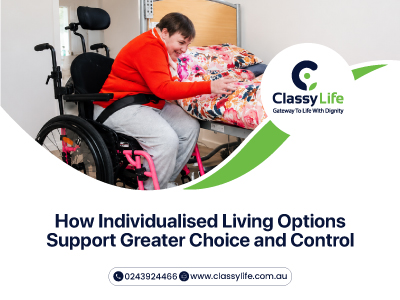
Everyone deserves a home that actually feels like theirs. That is the whole idea behind Individualised Living Options (ILO) support funded by the NDIS.
Sometimes life calls for a change of scene. A break. A chance to try something new, recharge, or simply have some time that is genuinely your own.
Finding the right housemate is one of the most important SIL decisions. When you are living with a disability and exploring Supported Independent Living (SIL) in Central Coast, Newcastle
Families want their loved ones with disabilities to live in a safe, happy and comfortable home. They also want them to have choice, independence and the right support.
Home and living supports are important because it directly affects a person’s everyday life. It plays a big role in the independence and personal growth of people with disabilities.
Supported Independent Living (SIL) and in-home care are two important NDIS-funded disability support models, each offering meaningful benefits depending on the participant’s needs and lifestyle preferences.
Disability housing plays an important role in helping people live safely, independently, and with dignity. The right home can improve daily life, support personal goals, and create a stronger sense of belonging. Through the NDIS, participants have the opportunity to access housing that is designed to meet their individual disability needs and support a better quality of life.