

10 Essential Features to Look for in Quality Disability Accommodation.
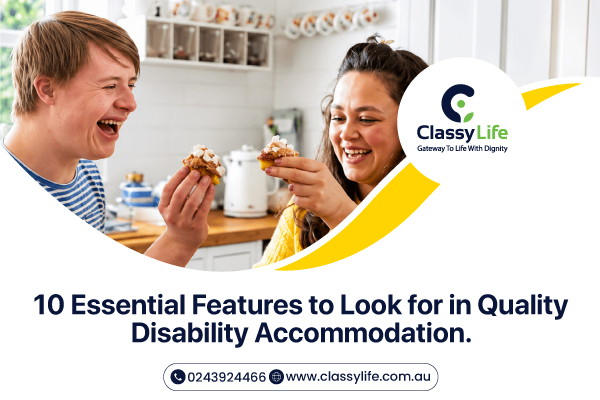
The right home can significantly influence a person’s safety, independence and overall quality of life. Finding quality disability accommodation involves a lot of important factors. The home should suit the participant’s mobility, disability support requirements, and long-term goals.
1. Accessible Design
Good accessible housing should allow residents to move around safely and comfortably. Depending on individual requirements, this may include step free entrances, wide doorways, accessible bathrooms, lowered kitchen surfaces, grab rails and sufficient space for mobility equipment. Specialist Disability Accommodation may be designed under categories such as Improved Liveability, Robust, Fully Accessible and High Physical Support.
2. Safety and Security
Reliable locks, smoke alarms, secure entrances, good lighting and monitoring systems can help residents with disability support needs feel protected without limiting their privacy or independence. Homes built to the Robust SDA design category go further again, using durable materials and dedicated safe spaces designed to hold up under high use while still feeling like an ordinary home rather than an institution.
3. A Convenient Location
Location can affect a participant’s ability to participate in everyday life. Look for accommodation close to public transport, healthcare services, shops, parks, workplaces, education and recreational facilities. A well-connected home can reduce isolation and make community participation easier.
4. Opportunities for Community Inclusion
A home should help people with disabilities remain connected to friends, family and the wider community. Quality accommodation is usually located within an established neighbourhood rather than separating residents from everyday community life.
5. Personalised Support
Every person has different routines and support needs. A reliable NDIS accommodation provider should take time to understand the resident and develop support arrangements that promote choice and control.
6. Appropriate Assistive Technology
Assistive technology can make daily activities safer and more manageable. Useful features may include automated doors, adjustable benches, communication systems, sensor lighting, smart appliances and emergency call buttons.
7. Trained and Available Staff
Where onsite or regular assistance is required, participants should know when staff are available and what support they can provide. NDIS support workers should be appropriately trained, respectful and familiar with each participant’s disability needs, health requirements and personal goals.
8. Comfort, Privacy and Independence
Disability accommodation should feel like a home. Residents should have private areas, comfortable shared spaces and opportunities to personalise their rooms. They should also be supported to make everyday decisions about meals, routines, visitors and activities.
9. Emergency Preparedness
A quality provider should have clear procedures for fires, medical emergencies, power failures, severe weather and other unexpected events. Emergency plans must consider each participant’s mobility, communication and support requirements. registered NDIS service providers are expected to maintain systems for risk, incident, emergency and disaster management.
10. A Trusted and Transparent Provider
Before selecting an NDIS accommodation provider, ask about service agreements, staff training, complaints procedures, incident management and continuity of support. Residents and families should receive clear information and feel comfortable raising concerns.
Classy Life is a registered NDIS service provider, r providing quality disability accommodation in NSW. Registered with the NDIS Quality and Safeguards Commission, we are a SIL and SDA service provider who can help you make the most out of your NDIS plan. Reach out to us today to find home and living support options!